
 Log in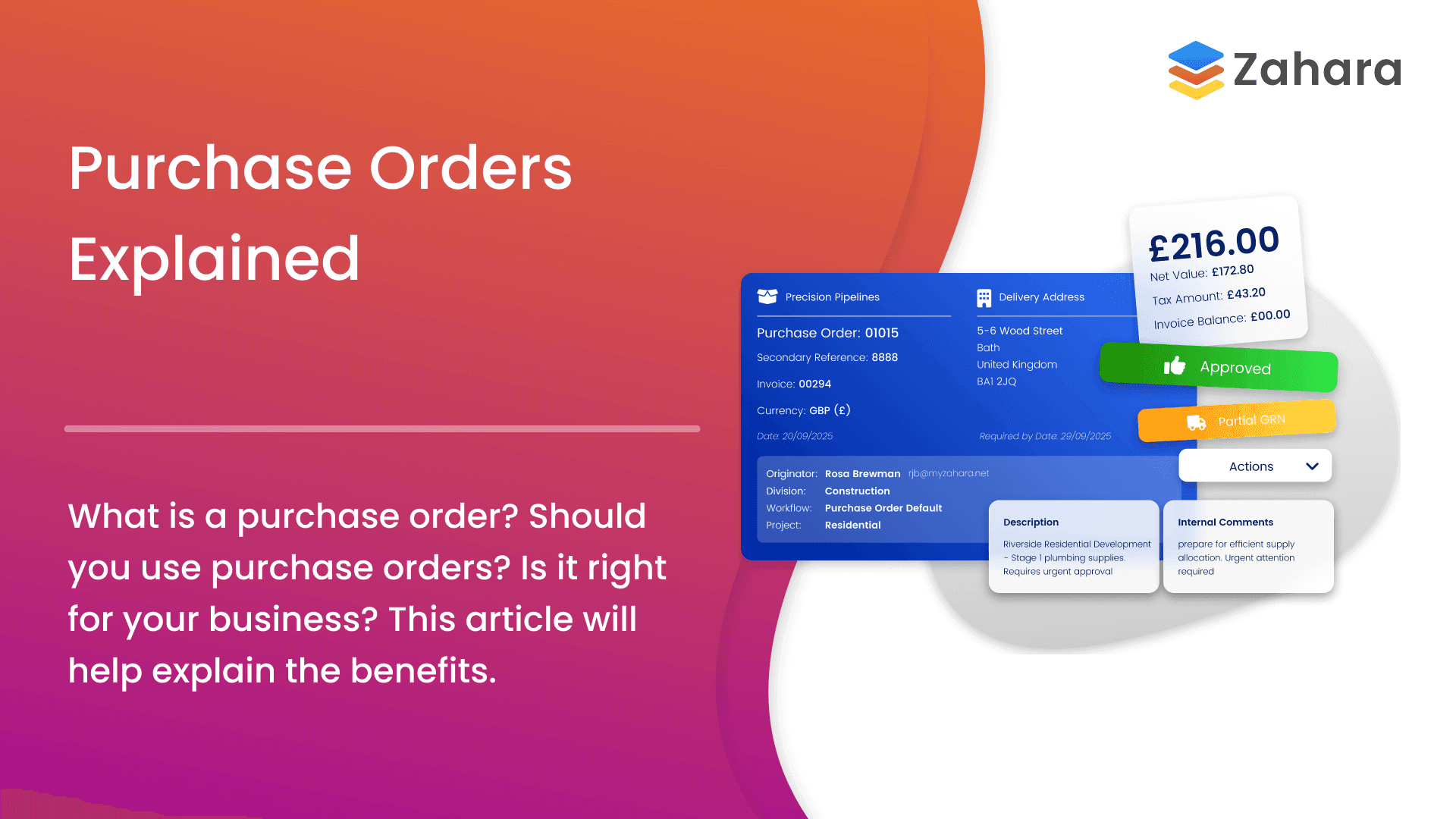
A purchase order (PO) is a formal request from a buyer to a supplier for goods or services. It confirms:
- What is being purchased?
- Cost.
- When it should be delivered.
- How will it be paid?
Once accepted, a purchase order becomes a legally binding agreement.
If you’re asking “what is a purchase order?”, the simple answer is:
It’s a control document that helps businesses manage spending before committing funds.
The following sections will cover purchase orders in detail—how they work, when to use them, and their benefits for accounts payable automation.
What Is a Purchase Order in Simple Terms?
A purchase order is a document raised before a purchase is made.
It acts as:
- a request to buy.
- a record of approval.
- a contract between buyer and supplier.
Without a PO, businesses often rely on emails, calls, or informal agreements. That leads to:
- unclear pricing.
- missed approvals.
- invoice disputes.
Purchase orders fix this by creating a clear audit trail.
Now that we've explained what a purchase order is, let's look at why you should use one.
Purchase orders give finance teams control before money is spent.
For buyers
- Track what has been ordered.
- Control budgets and approvals.
- Avoid unauthorised spending.
- Match invoices against approved orders.
For suppliers
- Clear instructions on what to deliver.
- Reduced payment disputes.
- Confidence that the order is approved.
Without a PO system, finance teams only react to invoices instead of controlling spending upfront.
How the Purchase Order Process Works
Here is a standard purchase order workflow:
- A need for goods or services is identified.
- A purchase requisition is created.
- The request is approved internally.
- A purchase order is issued to the supplier.
- The supplier accepts the PO
- Goods or services are delivered.
- The supplier sends an invoice.
- The invoice is matched to the PO and approved.
This process is often called three-way matching.
If you want to automate this flow, tools like
? https://zahara.local/purchase-order-software/
help manage the entire lifecycle in one place.
You might be wondering when to use a purchase order.
When should you use a purchase order? Use one when:
- You need visibility of committed costs.
- You are placing high-value orders.
- You are working with regular suppliers.
- Reduce invoice disputes.
In summary, if spending control matters, implement a PO process.
Some online vendors may not accept POs. In those cases, alternatives may be required.
Understanding when to use a purchase order is important. Next, consider what a purchase order must include:
A well-structured purchase order includes:
- Unique PO number.
- Supplier details.
- Buyer details.
- Order date.
- Delivery date.
- Delivery address.
- Item descriptions.
- Quantities.
- Unit prices.
- Total cost.
- Tax details.
- Payment terms.
- Terms and conditions.
Omitting any of these risks can delay or lead to disputes.
Types of Purchase Orders Explained
Different purchasing scenarios require different PO types.
Standard Purchase Order
Used for one-off purchases with fixed details.
Blanket Purchase Order
Used when buying repeatedly over time with agreed pricing.
Standing Purchase Order
Used for regular deliveries under one agreement.
Choosing the right type reduces admin and improves supplier relationships.
It's also helpful to compare purchase orders with invoices to understand their roles:
This is one of the most common questions.
| Purpose | Request goods/services | Request payment |
| Created by | Buyer | Supplier |
| Sent to | Supplier | Buyer |
| Timing | Before delivery | After delivery |
Purchase orders are first created and sent by the buyer to confirm the order and set terms in advance. This document initiates the purchase process.
Invoices are generated and sent by the supplier after the goods or services are delivered, requesting payment for the items or services provided. The invoice references the original purchase order for verification.
Beyond format differences, you may ask if purchase orders are legally binding:
Yes—once accepted by the supplier, a purchase order becomes a contract.
It defines:
- Pricing.
- Delivery terms.
- Payment expectations.
In a dispute, the PO is often the first document reviewed.
Common Purchase Order Formats
Suppliers may accept different formats depending on their systems.
- Easy to read
- Standard format
CSV
- Useful for large orders
- Supports bulk data
JSON
- Used for system integrations
- Enables automation
Choosing the right format reduces processing errors.
Managing Purchase Order Terms and Conditions
Payment terms must be clear on the PO.
Example:
- PO states: Net 30
- Invoice states: Immediate
This creates conflict.
The safest approach:
- Define terms clearly on the PO
- link to your company’s full terms
This protects you in disputes.
Tips for Creating Better Purchase Orders
Improve your PO quality with these steps:
- Use consistent supplier naming.
- Include accurate product codes.
- Define units clearly
- Confirm the price first.
- Keep layouts simple
- Restrict who can raise POs.
Strong POs prevent errors later.
How Purchase Orders Support Invoice Processing
Purchase orders play a key role in invoice processing.
They allow finance teams to:
- match invoices automatically
- reduce manual data entry
- flag discrepancies early
Systems like
? https://zahara.local/automated-invoice-processing/
Connect POs, receipts, and invoices into one workflow.
This removes manual checks and accelerates approvals.
Manual Purchase Orders vs Automated Systems
Manual processes create friction.
| Speed | Slow | Fast |
| Accuracy | Prone to errors | Consistent |
| Visibility | Limited | Real-time |
| Control | Reactive | Proactive |
Automation shifts finance teams from admin work to control.
In summary, what have we learned about purchase orders?
A purchase order is more than a document.
It is a control mechanism that:
- manages spend
- reduces risk
- improves supplier communication
If your current process relies on emails or spreadsheets, you are likely missing visibility and control.
Modern tools like Zahara bring purchasing, approvals, and invoice matching into one system.
FAQs About Purchase Orders
What is a purchase order used for?
It is used to request and control purchases before money is spent.
Is a purchase order legally binding?
Yes, once accepted by the supplier.
Do small businesses need purchase orders?
Yes, especially if they want control over spending and approvals.
What is the difference between a PO and an invoice?
A PO is issued before the purchase to initiate and authorise the transaction. An invoice is sent post-delivery to request payment and reference the original PO.
You Might Also Like to Read
? https://zahara.local/purchase-orders/purchase-order-management/
? https://zahara.local/purchase-orders/best-po-system/
? https://zahara.local/purchase-orders/po-system-for-small-businesses/